
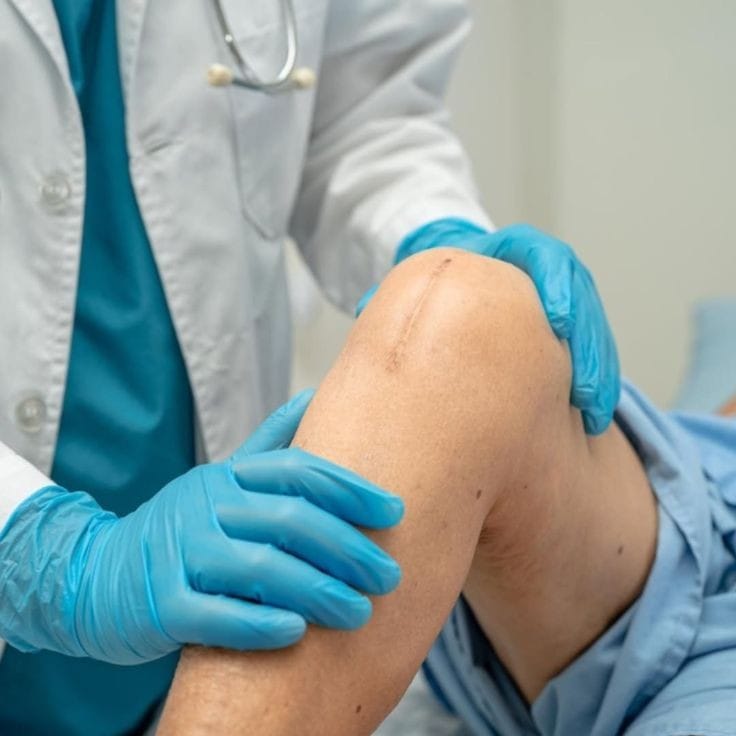
Knee pain can slowly take over everyday life. What starts as mild discomfort in the right knee may gradually turn into severe pain that makes walking, climbing stairs, or even standing difficult. Many people try medications, physiotherapy, and lifestyle changes for years, hoping the pain will improve. But when the joint damage becomes severe, right knee replacement surgery often becomes the most effective solution to restore mobility and quality of life.
At Muthu Hospital, advanced orthopedic treatments help patients move beyond chronic knee pain. Under the expertise of Dr. M. Mithran, who has performed more than 2,500 successful joint replacement surgeries, patients receive modern surgical care designed to help them walk comfortably again.
What Is Right Knee Replacement? Why Do People Need It?
Right knee replacement is a surgical procedure in which the damaged parts of the knee joint are removed and replaced with a specially designed artificial joint called a knee implant. The goal of the surgery is to reduce pain, improve joint function, and allow patients to return to normal daily activities.
The knee joint is formed by the thigh bone, shin bone, and kneecap. When arthritis or injury damages the cartilage that protects these bones, the joint becomes painful and stiff. During right knee replacement surgery, these worn-out surfaces are replaced with smooth artificial components that allow the knee to move naturally again.
Many patients consider surgery only after trying several non-surgical treatments. However, when the joint damage becomes advanced, conservative treatments may no longer provide relief.
People may need right knee replacement surgery when they experience:
- Severe pain that continues even during rest or sleep
- Difficulty walking or standing for long periods
- Stiffness that limits knee movement
- Swelling that does not improve with treatment
- Reduced ability to perform daily activities
In such situations, replacing the damaged joint can restore comfort and independence.
Common Causes of Severe Right Knee Damage
Osteoarthritis, which slowly wears away cartilage in the joint
Rheumatoid arthritis, an autoimmune condition that damages joint tissues
Post-traumatic arthritis caused by injuries or fractures
Long-term ligament damage or untreated sports injuries
Severe joint deformity or cartilage loss
Symptoms That Indicate Knee Replacement Surgery
Persistent knee pain despite medication
Difficulty climbing stairs or getting up from a chair
Limited knee flexibility
Swelling and stiffness in the joint
Knee instability or weakness
Total Right Knee Replacement and Partial Right Knee Replacement
In a total right knee replacement, the surgeon replaces the entire knee joint. The damaged cartilage and bone are removed and replaced with metal and medical-grade plastic components that recreate the natural movement of the knee.
This procedure is typically recommended when arthritis or joint damage affects most of the knee. Total replacement provides long-term pain relief and significantly improves joint stability.
In some patients, only one part of the knee joint is damaged. In these cases, a partial knee replacement may be performed.
This procedure replaces only the affected section of the knee while preserving the healthy bone and ligaments. Because less tissue is involved, recovery may be quicker, and the knee often feels more natural after surgery.
However, not all patients are suitable candidates for partial replacement.
The choice between total and partial knee replacement depends on the extent of joint damage.T otal knee replacement replaces the entire joint and is recommended when arthritis affects multiple areas of the knee. Partial replacement targets only the damaged section and preserves healthy tissue.
Your orthopedic surgeon evaluates the knee condition carefully to determine which procedure will provide the best long-term results.
How to Prepare for Right Knee Replacement Surgery
Proper preparation plays an important role in ensuring a successful surgery and smooth recovery.
Before surgery, patients typically undergo a detailed medical evaluation that includes:
- Cardiac and general health assessment
- Blood tests and imaging scans
- Evaluation for infections or dental issues
- Anesthesia assessment
These steps ensure that the patient is medically fit for surgery and reduce the risk of complications.
Step-by-Step Right Knee Replacement Procedure
During the surgery, the patient is given anesthesia to ensure comfort. The orthopedic surgeon then carefully removes the damaged cartilage and bone from the knee joint.
The procedure generally involves:
- Making a small incision in the knee
- Removing damaged bone and cartilage
- Preparing the joint surface
- Placing the artificial knee implant
- Checking alignment and movement of the joint
- Closing the incision
The surgery is performed in a sterile operation theatre using advanced instruments to ensure precision and safety.
Recovery Timeline After Right Knee Replacement
Recovery after surgery happens gradually as the body heals and the new joint adapts.
The typical recovery timeline includes:
- First few days: Patients begin walking with support and start physiotherapy
- 2–3 weeks: Pain reduces and mobility improves
- 4–6 weeks: Patients resume many daily activities
- 3 months: Most patients return to normal routine and travel comfortably
Physiotherapy plays a major role in strengthening the muscles and improving joint movement during recovery.
Benefits of Total Right Knee Replacement
Significant reduction in knee pain
Improved joint stability and mobility
Ability to walk longer distances
Better sleep without constant pain
Improved overall quality of life
Cost of Right Knee Replacement Surgery
The cost of right knee replacement surgery can vary depending on several factors, including hospital facilities, implant type, and patient health conditions.
At Muthu Hospital, patients receive high-quality orthopedic care with modern surgical technology and experienced specialists. The hospital has been providing trusted orthopedic treatment since 1953, making it one of the most respected centers for joint replacement in the region.
Life After Right Knee Replacement Surgery
Most patients notice a remarkable improvement in their lifestyle after recovery. Activities that were once painful become easier again.
Patients can usually return to:
- Walking comfortably
- Climbing stairs
- Traveling
- Cycling or swimming
- Light recreational sports
However, activities that require deep squatting, kneeling, or high-impact movements are generally avoided to protect the new joint.
When Should You See an Orthopedic Specialist?
If knee pain continues for several months and begins interfering with daily life, it is important to consult a specialist. Early diagnosis and proper treatment can prevent further joint damage.
Patients seeking expert orthopedic care can consult Dr. M. Mithran at Muthu Hospital, where advanced joint replacement procedures are performed with modern techniques and patient-focused care.
With thousands of successful surgeries and recognition as one of South India’s leading joint replacement specialists, Dr. Mithran and the team at Muthu Hospital are dedicated to helping patients regain mobility, confidence, and a pain-free life.
Leave a Reply