
Quick Summary
- Hip replacement relieves pain and restores mobility in damaged hip joints.
- A 28-year-old patient from Kariyapatti underwent successful hip replacement after conservative treatment failed.
- The patient developed severe hip arthritis due to avascular necrosis (AVN).
- Many patients begin standing and walking with support within a day after surgery.
- Early treatment and the right hip operation can improve recovery and quality of life.
- Consulting an experienced orthopedic surgeon helps achieve the best outcome.
Why Should You Not Ignore Persistent Hip Pain?
Persistent hip pain is often a sign of an underlying joint problem that should not be ignored. Although the pain may begin as mild discomfort while walking, climbing stairs, or standing up, it can gradually make everyday activities difficult.
If medication and physiotherapy no longer provide relief, the hip joint may have suffered significant damage. In such cases, hip replacement can help relieve pain, restore mobility, and improve quality of life. One young patient at Muthu Hospital experienced this journey, showing how timely treatment can make a remarkable difference.
What Happened to This 28-Year-Old Patient?
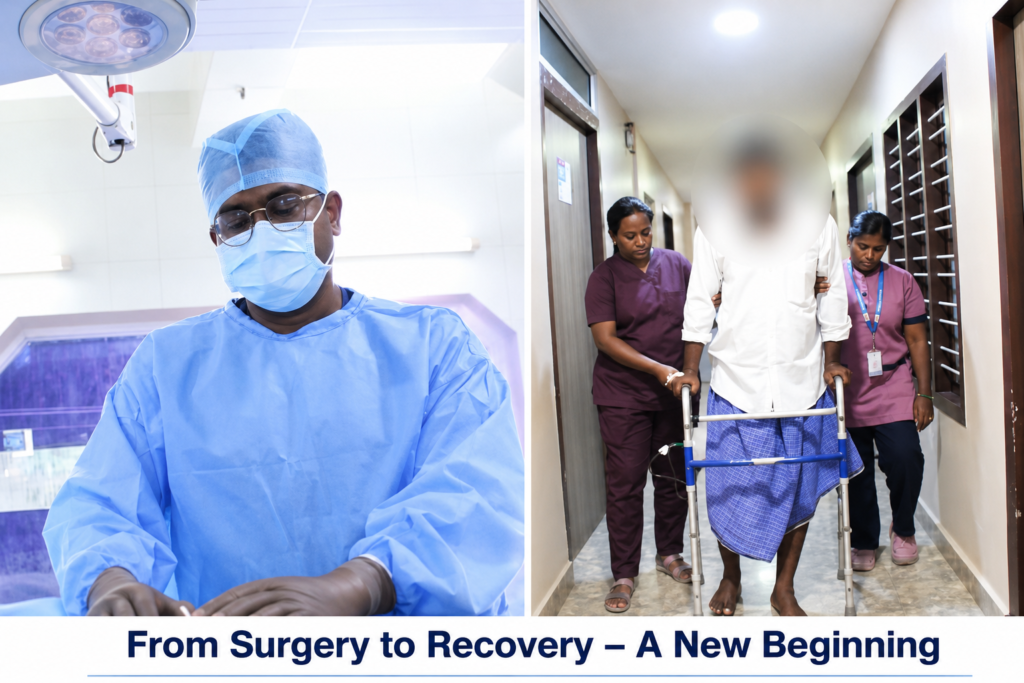
A 28-year-old patient from Kariyapatti visited Muthu Hospital after struggling with hip pain for seven months. Over time, the pain became so severe that he found it difficult to sit, stand, or walk comfortably.
After a detailed examination and imaging tests, Dr. M. Mithran diagnosed advanced hip arthritis caused by avascular necrosis (AVN). Although conservative treatment was tried first, it did not relieve his symptoms because the joint damage had progressed.
Therefore, Dr. Mithran recommended hip replacement to relieve pain, restore mobility, and help the patient return to his normal daily life.
What Is Hip Replacement?
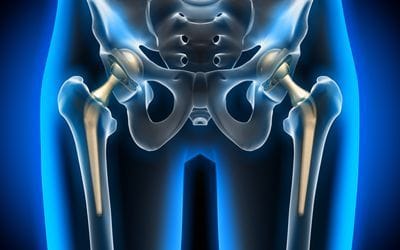
Hip replacement is a surgical procedure that replaces the damaged parts of the hip joint with artificial implants to relieve pain and restore smooth movement.
The hip is a ball-and-socket joint that allows you to walk, sit, and move comfortably. However, conditions such as arthritis and avascular necrosis can damage the joint, making everyday activities painful.
During a hip operation, the surgeon replaces the damaged ball and socket with artificial implants. Modern hip replacement techniques help reduce pain, improve mobility, and allow many patients to return to their normal daily activities.
Why Did This Young Patient Need a Hip Operation?
This young patient needed a hip operation because avascular necrosis had severely damaged his hip joint. Although he was only 28 years old, age was not the deciding factor. The extent of the joint damage made surgery the best treatment option.
Dr. M. Mithran found that the femoral head had collapsed and could no longer move smoothly inside the hip socket. Since conservative treatment had already failed, hip replacement offered the best chance to relieve pain, restore mobility, and help the patient return to an active lifestyle.
How Was the Hip Replacement Performed?
Hip replacement involves removing the damaged parts of the hip joint and replacing them with artificial implants to restore smooth movement. After evaluating the patient’s condition, Dr. M. Mithran carefully planned the procedure.
During surgery, he removed the damaged femoral head, which had collapsed due to avascular necrosis, and prepared the hip socket for the new implant. The artificial joint restored stability and smooth movement.
The goal of the procedure was simple: relieve pain, improve mobility, and help the patient return to an active, independent life.
How Did the Patient Recover After Hip Replacement?
The patient recovered well after hip replacement because he was young, physically fit, and received timely treatment. Immediately after surgery, Dr. M. Mithran expected him to stand and begin walking with support the very next morning.
Early walking is an important part of recovery. It improves blood circulation, strengthens the muscles around the new hip joint, and reduces the risk of complications. In addition, regular physiotherapy and follow-up care help patients regain mobility and return to their normal activities with confidence.
Recovery Timeline
| Recovery Stage | What to Expect |
| Day 1 | Stand and take a few assisted steps under medical supervision. |
| Week 1 | Walking becomes easier with physiotherapy and guided rehabilitation. |
| Weeks 2–6 | Muscle strength, flexibility, and confidence continue to improve. |
| Following Months | Most patients return to work, daily activities, and an active lifestyle with significantly less pain. |
When Is Hip Replacement Better Than Conservative Treatment?
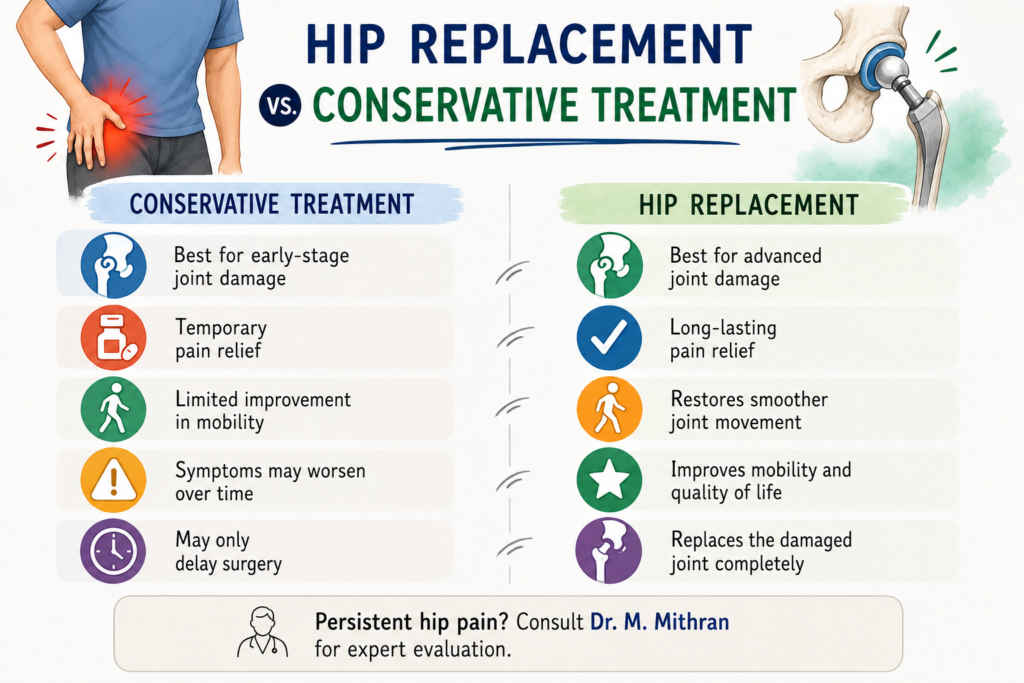
Conservative treatment works well for many patients during the early stages of hip disease. However, once the hip joint has suffered severe damage, surgery usually provides the best long-term solution.
Conservative Treatment vs. Hip Replacement
| Conservative Treatment | Hip Replacement |
| Best for early-stage joint damage | Best for advanced joint damage |
| Temporary pain relief | Long-lasting pain relief |
| Limited improvement in mobility | Restores smoother joint movement |
| Symptoms may gradually worsen | Improves mobility and quality of life |
| May delay surgery | Replaces the damaged joint completely |
Dr. Mithran always recommends treatment based on the patient’s condition rather than age. A detailed clinical examination and imaging studies help determine whether conservative treatment or hip replacement will provide the best outcome.
Why Choose Muthu Hospital for Hip Replacement?
For more than 70 years, Muthu Hospital has been providing trusted orthopedic care since its establishment in 1953.
Dr. M. Mithran specializes in hip replacement, knee replacement, arthroscopy, fracture care, sports injuries, and trauma management. Every patient receives a personalized treatment plan based on their age, lifestyle, activity level, and the severity of their condition.
From diagnosis and surgery to physiotherapy and follow-up care, the orthopedic team focuses on helping patients recover safely and return to an active life as quickly as possible.
Looking for an Experienced Orthopedic Surgeon for Hip Replacement?
Living with persistent hip pain can make even simple daily activities difficult. However, you don’t have to live with it forever. When medication, physiotherapy, or other conservative treatments no longer provide relief, hip replacement can help restore mobility, relieve pain, and improve your quality of life.
At Muthu Hospital, Dr. M. Mithran offers personalized hip replacement treatment using advanced surgical techniques and comprehensive post-operative care. Every treatment plan is tailored to the patient’s condition, lifestyle, and recovery goals.
Book a consultation today to find out whether hip replacement is the right solution for you and take the first step toward pain-free movement.
Frequently Asked Questions
Who needs a hip operation?
Patients with severe arthritis, avascular necrosis, hip fractures, or persistent hip pain that does not improve with medication or physiotherapy may benefit from a hip operation.
Can young adults undergo hip replacement?
Yes. Young adults with severe joint damage, such as avascular necrosis, can achieve excellent outcomes with hip replacement when conservative treatment has failed.
How long does recovery take after hip replacement?
Many patients begin standing and walking with assistance within one day after surgery. Recovery continues over the following weeks with physiotherapy, and most patients gradually return to their normal daily activities.
What causes avascular necrosis of the hip?
Avascular necrosis occurs when the blood supply to the femoral head is interrupted. As the bone weakens and collapses, it can lead to severe arthritis and long-term hip pain.
Is hip replacement a safe procedure?
Yes. Hip replacement is one of the most successful orthopedic procedures worldwide when performed by an experienced orthopedic surgeon using modern surgical techniques.
How long do hip replacement implants last?
Modern hip implants often last 15 to 20 years or longer, depending on the patient’s age, activity level, implant type, and regular follow-up care.
Why should I consult an orthopedic surgeon for persistent hip pain?
An orthopedic surgeon can identify the exact cause of your hip pain, recommend the most appropriate treatment, and determine whether a hip operation or another treatment option is right for your condition.
Leave a Reply