
Quick Summary
- Hip replacement treats severely damaged hip joints.
- A 53-year-old patient underwent successful hip replacement at Muthu Hospital.
- An uncemented implant was chosen based on the patient’s bone quality.
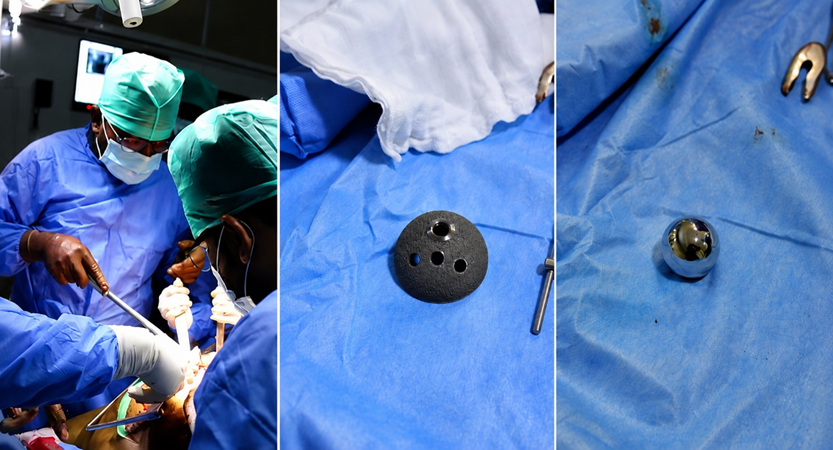
- Both the damaged cup and ball of the hip joint were replaced.
- The patient walked comfortably within seven days after surgery.
- Modern implants help restore mobility and reduce pain.
- Choosing an experienced hip replacement surgeon improves recovery.
Why Should You Not Ignore Persistent Hip Pain?
Hip pain often starts as mild discomfort while walking or climbing stairs, then worsens until everyday activities become difficult. When medication and physiotherapy stop helping, it usually signals significant joint damage. A patient came to Muthu Hospital with severe pain and a visible bulge in his left hip. His recovery shows what modern hip replacement can do.
What Happened to This 53-Year-Old Patient?
The patient arrived with persistent left hip pain and a noticeable bulge that was making walking harder and reducing his mobility. After examination and imaging, Dr. M. Mithran found the ball of the hip joint had lost its round shape and flattened from severe damage. Since the joint could not be repaired, he recommended hip replacement.
Given the patient’s bone quality, Dr. Mithran chose an uncemented hip replacement to relieve pain, restore movement, and help him return to an active life.
What Is Hip Replacement?
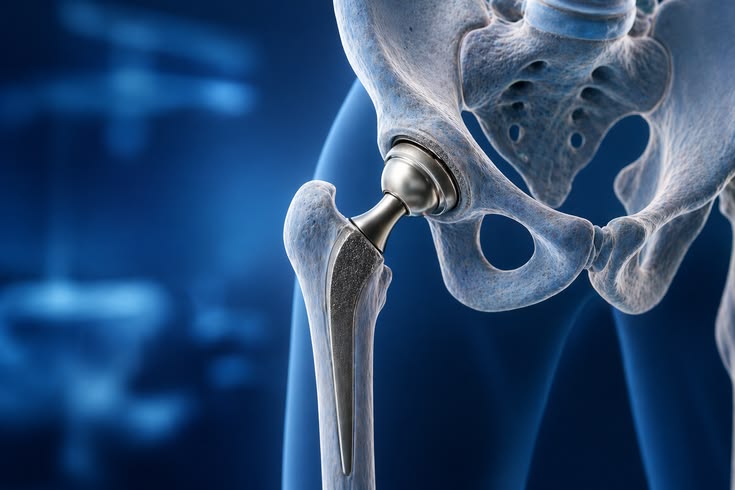
Hip replacement removes the damaged parts of the hip joint and fits artificial implants in their place. Surgery replaces both the pelvic socket (cup) and the ball at the top of the thigh bone, letting the joint move smoothly again.
Why Did Dr. Mithran Choose an Uncemented Implant?
Implant choice is one of the most important decisions in hip replacement, and not every patient needs the same type. There are two main options: cemented and uncemented. Dr. Mithran chose uncemented for this patient because his bone quality suited it.
Unlike cemented implants, uncemented implants let natural bone gradually grow onto the implant surface, creating a strong biological bond that supports excellent long-term stability.
Cemented vs. Uncemented Hip Replacement
| Feature | Cemented | Uncemented |
| Fixation | Bone cement secures implant | Bone gradually grows into implant |
| Best suited for | Weaker bone quality | Good bone quality |
| Long-term stability | Good | Excellent biological fixation |
After evaluating this patient’s bone quality, Dr. Mithran recommended an uncemented hip replacement as the best long-term solution.
What Is an Auxinium Hip Implant?
Dr. Mithran used the latest Auxinium hip implant for this patient. Auxinium is an advanced implant material built for durability, smooth joint movement, and strong long-term performance.
How Did the Patient Recover After Hip Replacement?
One of the first questions patients ask is, “How soon will I be able to walk again?” For this 53-year-old patient, the recovery was encouraging.
Just seven days after surgery, he shared his experience:
“I am 53 years old. I underwent hip replacement surgery seven days ago.
The pain that had affected his daily life was gone, and he was able to walk comfortably with renewed confidence. While every patient’s recovery is different, early mobilization, regular physiotherapy, and following the surgeon’s advice play an important role in achieving the best outcome.
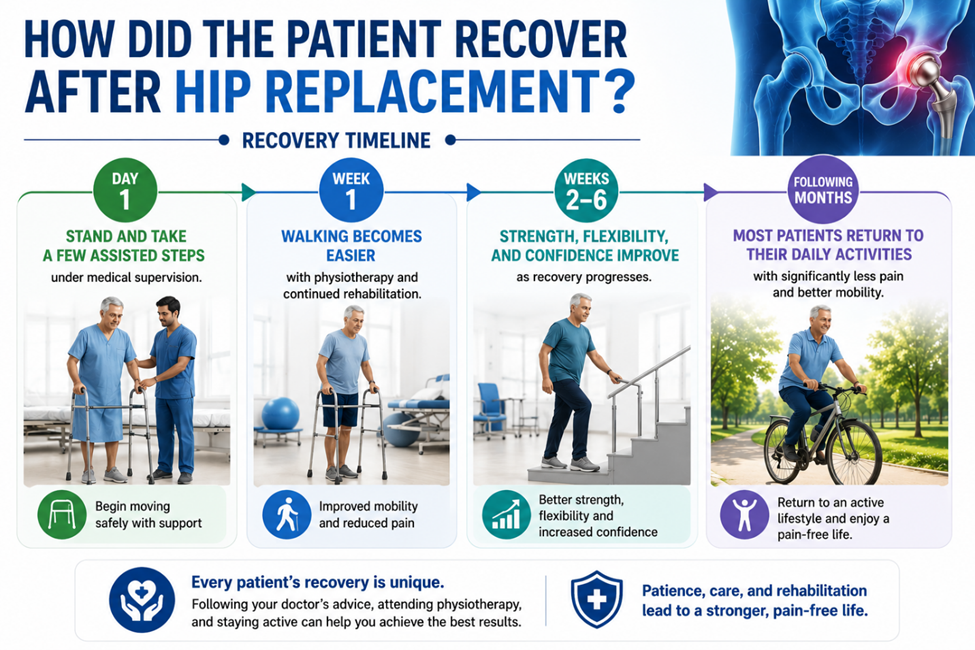
Recovery Timeline
Day 1: Stand and take a few assisted steps under medical supervision.
Week 1: Walking becomes easier with physiotherapy and continued rehabilitation.
Weeks 2–6: Strength, flexibility, and confidence improve as recovery progresses.
Following Months: Most patients return to their daily activities with significantly less pain and better mobility.
Why Choose an Experienced Hip Replacement Surgeon?
Hip replacement is highly successful, but good results depend on careful planning, the right implant, precise technique, and structured rehabilitation. An experienced surgeon evaluates the cause of pain, the extent of joint damage, bone quality, the most suitable implant, and the patient’s activity level before building a personalized treatment plan.
Looking for an Experienced Hip Replacement Surgeon?
Persistent hip pain should never be ignored. When medication and physiotherapy no longer provide relief, hip replacement can help restore mobility and improve your quality of life.
At Muthu Hospital, Dr. M. Mithran provides personalized hip replacement treatment using advanced implants and modern surgical techniques.
Book your consultation today to find out whether hip replacement is the right solution for you.
Frequently Asked Questions
Who needs hip replacement surgery?
Patients with severe hip arthritis, advanced joint damage, deformity, or persistent pain limiting daily activities may benefit. A hip replacement surgeon evaluates symptoms, imaging, and overall health before recommending surgery.
What is the difference between cemented and uncemented hip replacement?
Cemented implants are fixed in place with bone cement. Uncemented implants let natural bone grow into the implant over time. The right choice depends on bone quality, age, and overall health.
Is hip replacement surgery safe?
Yes. It is one of the most successful orthopedic procedures performed worldwide, with a high success rate when an experienced surgeon uses modern techniques and the right implant.
How long does recovery take after hip replacement?
Many patients stand and walk with support within a day of surgery. Physiotherapy over the following weeks builds strength and balance, and most return to normal activity within six to twelve weeks.
How long do hip implants last?
Lifespan depends on implant type, bone quality, activity level, and overall health. With proper care and follow-up, many implants perform well for 15 to 20 years or longer.
Can I walk after hip replacement surgery?
Yes, early walking is a key part of recovery. In this case, the patient walked comfortably and pain-free within seven days, showing how effective modern hip replacement and rehabilitation can be.
Why should I choose an experienced hip replacement surgeon?
Hip replacement requires careful planning, precise implant positioning, and structured rehabilitation. An experienced surgeon recommends the right implant, performs the surgery with advanced techniques, and guides recovery toward the best long-term outcome.
Leave a Reply